
Discover how AI-driven text-to-video pipelines are transforming video production, moving from simple storyboards to polished shots. Learn how these innovative tools are elevating creativity and efficiency in a competitive landscape.
The Evolution of Video Production with AI
Video production has come a long way.
For decades, crews wrangled lights, lenses, and logistics. Storyboards became shot lists, then expensive schedules. One bad weather day, and budgets slipped. I once sat in an edit suite at 2am, stitching B roll because a key scene ran long. Not glamorous, just necessary.
Traditional methods carried drag. Slow approvals, costly reshoots, rigid timelines. Small teams rarely got past gatekeepers. Creativity often lost to calendars. And to overtime.
AI changed the rhythm. Not magic, just leverage. Write a prompt, sketch a board, and you have a moving previsual in minutes. Tools like Runway spin up style tests, clean plates, and quick comps. Editors offload transcription, rough cuts, and captions. Producers preview casting, wardrobe, and locations as moving references, before a single hire. Sometimes it feels too quick. Then again, speed wins.
The gains stack up:
– Faster concept proof, days become hours
– Lower risk, fewer reshoots and idle crews
– Wider range, more looks without extra kit
– Better iteration, more tests, less ego
For a quick scan of what is shaping the market, see The 3 biggest AI video tools by Alex Smale.
We will move into how text becomes footage next, and where it breaks, perhaps. There is nuance.
Understanding Text-to-Video Pipelines
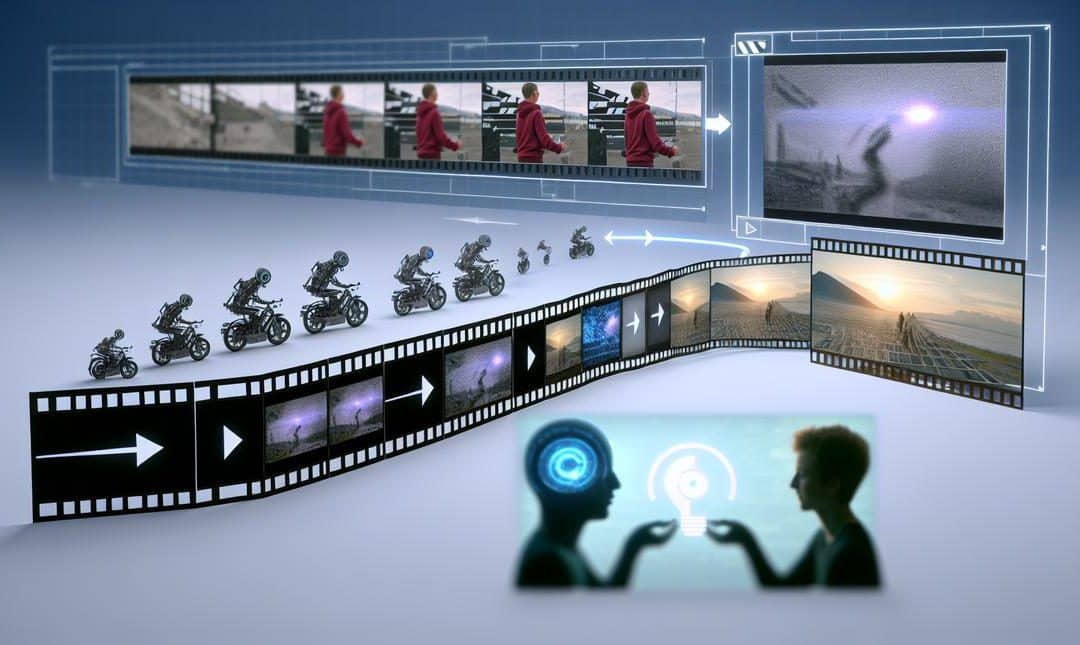
Text to video pipelines turn prompts into moving pictures.
They start with your brief, usually plain text, sometimes sketches. A language model breaks it into a shot list, characters, beats, and a rough style. That plan becomes structure, a kind of scene graph with timing, camera moves, and continuity rules.
A diffusion video model renders frames from noise, guided by the plan, reference images, and style cues. A temporal layer holds objects steady across frames, fixes flicker, and keeps lips in sync. If you add voice or music, an alignment step times cuts to beats, subtle but it matters.
Under the hood, a text encoder turns words into embeddings the model can read. Control models for depth or edges steer composition, useful when you must match brand assets. A lightweight critic scores motion and clarity, auto picks a best take, I still check by eye.
You steer the loop. Edit the prompt, add a palette, drop in a product shot, rerun. I have seen teams go from idea to a credible cut in under an hour, perhaps faster with Runway Gen 3.
This reaches beyond ads, I think. Training, pre visualisation, ecommerce demos, real estate tours, and game teasers all benefit. Quick previews invite bolder concepts, then safer versions for sign off. See tools compared in The 3 biggest AI video tools by Alex Smale. It feels almost too quick, and yet the craft still matters. This speed sets up what comes next, braver ideas and custom variations at scale.
Leveraging AI for Creativity and Innovation
AI should serve your ideas, not replace them.
You already saw how prompts become moving pictures. Now lean on that flow for fresh angles, faster. Generative video acts like a restless creative partner, it supplies variations, unexpected cuts, and visual metaphors you would not have storyboarded. I have watched a dry demo turn magnetic after swapping the same script into three visual tones. Oddly, the least polished version won on watch time. Perhaps people crave a little texture.
Use one tool well, not ten. If you prefer speed and style presets, try Runway Gen-3. If you want granular control, keep your brand kit tight, colour, type, shot rhythm, so every variation still feels like you.
- Spin one script into three arcs, awareness, consideration, decision, per audience segment.
- Auto version by location, inventory, or weather, keep it relevant, and timely.
- Lock brand voice, then test hooks, openings, and CTAs, without losing identity.
The big lift comes from message match. Pair each video variant with its own landing page and retargeting chain. Shorten feedback loops. Drop what underperforms by midday, scale the winners by afternoon. For tool picks and setups, see AI video creation tools for small business marketing success.
This is not about chasing novelty. It is about shipping more relevant stories, more often, and I think, with more conviction.
Practical Applications and Benefits
Results beat theatrics.
The win shows up when a brief turns into a storyboard, then into shots, without a six week wrangle. Teams map prompts to scenes, lock brand rules, and push variants in parallel. It feels almost unfair, perhaps, seeing a day’s work deliver what used to take a sprint.
- A D2C skincare brand replaced a patchwork of freelancers with a text to video pipeline. Forty product demos in five days, cost per video down from £800 to £90, and a 28 percent lift in paid social ROAS. They used Runway once for motion passes, then batch rendered captions and sizes.
- A logistics firm’s L&D team turned SOPs into microlearning clips. Sixty videos in three days, not six weeks. Script checks caught compliance phrasing, while auto B roll filled gaps. Staff completion rates went up, I saw the dashboards, by a third.
- An agency serving hospitality localised ads into five languages from one storyboard. Time to first cut fell 75 percent, bookings rose during shoulder weeks. They templated hooks, swapped offers, and ran daily creative stand ups, simple, repeatable.
If you want a fast start, review these AI video creation tools for small business marketing success. Then, join a community of operators. Share prompts, swap shot lists, nick what works, and, I think, ship twice as much for half the spend.
Final words
AI video production marks a new era for creative industries. By integrating these technologies, businesses can streamline their video creation processes, cut costs, and enhance creativity. Such advancements make it possible for enterprises to stay competitive and relevant in an ever-evolving market. Reach out today to transform your video production capabilities.